Introduction
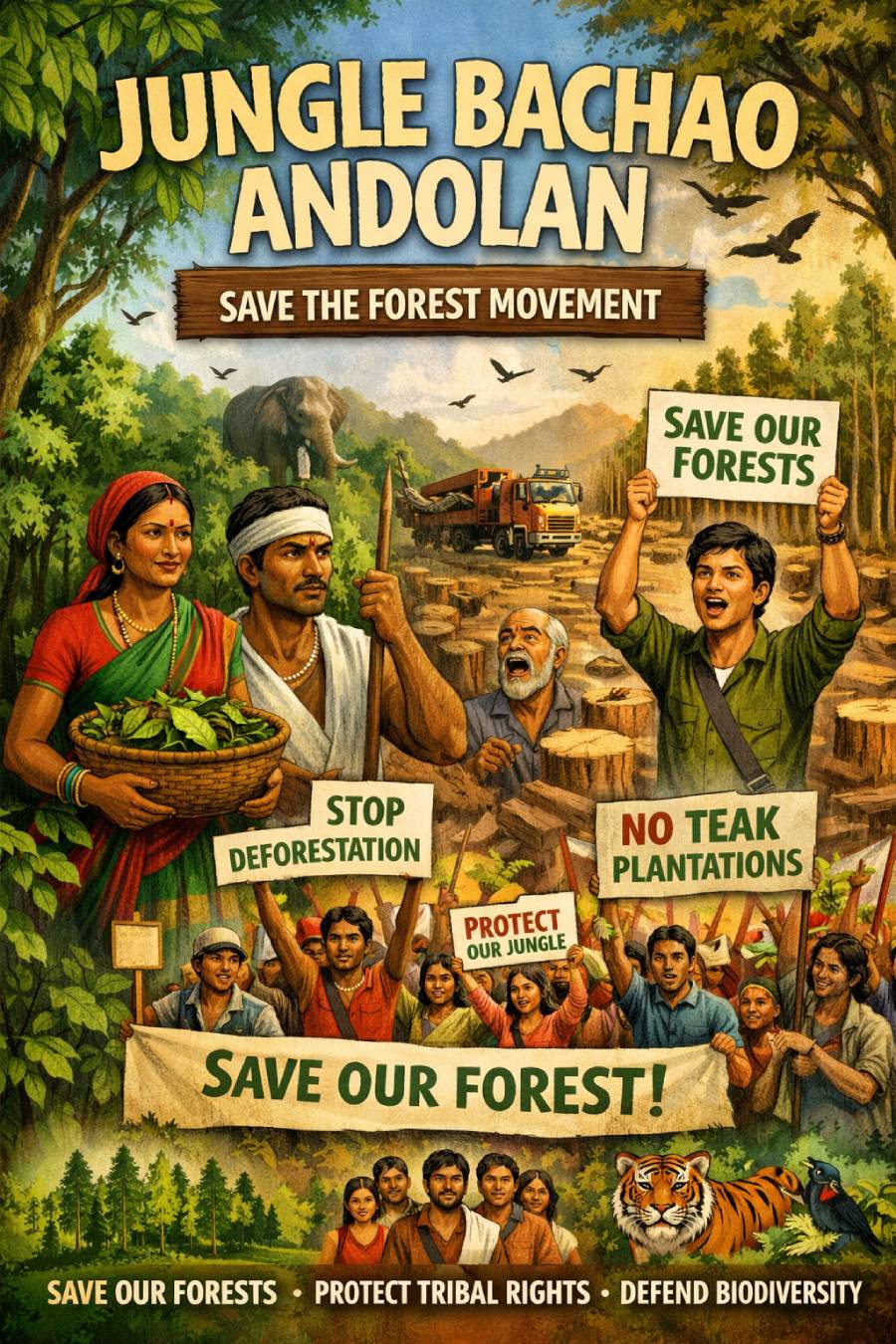
Jungle Bachao Andolan, also known as the Save the Forest Movement, is one of the most important environmental movements in India. It emerged in the early 1980s in the Singhbhum region of present-day Jharkhand (then part of Bihar). The movement was led mainly by tribal communities who protested against government policies that threatened natural forests.
The movement played a crucial role in raising awareness about forest conservation, biodiversity protection, and the rights of indigenous communities dependent on forests for survival.
What Is Jungle Bachao Andolan?
Jungle Bachao Andolan was a grassroots movement that opposed the Forest Department’s decision to replace native sal forests with commercial teak plantations. While teak was promoted for economic benefits, it severely disrupted the natural ecosystem.
For tribal communities, forests were not just resources but a way of life. The plantation policy endangered biodiversity and threatened the livelihood, culture, and identity of indigenous people.
Causes of Jungle Bachao Andolan
The movement started due to multiple environmental and social concerns:
- Replacement of natural forests with monoculture plantations
- Loss of biodiversity and wildlife habitats
- Threat to tribal livelihoods and traditional culture
- Lack of community participation in forest management
- Commercial exploitation of forest resources
Objectives of Jungle Bachao Andolan
The main objectives of the movement were:
- To protect natural forests from deforestation
- To oppose commercial forestry practices
- To safeguard tribal rights and traditional knowledge
- To promote sustainable and people-centric forest policies
Key Features of Jungle Bachao Andolan
Some defining features of the movement include:
- Led primarily by tribal communities
- Non-violent and community-driven protests
- Strong focus on ecological conservation
- Emphasis on local participation in forest-related decisions
Impact and Significance of Jungle Bachao Andolan
Jungle Bachao Andolan brought national attention to the dangers of prioritizing economic profits over environmental sustainability. It strengthened the belief that local communities are the best guardians of forests.
The movement influenced later policies related to sustainable development, tribal welfare, and community-based forest management in India.
Jungle Bachao Andolan in Indian Environmental History
Along with movements like Chipko Andolan and the Appiko Movement, Jungle Bachao Andolan holds a special place in India’s environmental history. It reinforced the need to balance development with conservation while respecting indigenous rights and ecological wisdom.
Frequently Asked Questions (FAQs) – Jungle Bachao Andolan
1. What is Jungle Bachao Andolan?
Jungle Bachao Andolan is an environmental movement in India that began in the early 1980s to protect natural forests from being replaced by commercial plantations.
2. Where did Jungle Bachao Andolan begin?
The movement started in the Singhbhum district of Jharkhand, which was part of Bihar at that time.
3. Why was Jungle Bachao Andolan launched?
It was launched to oppose the government’s policy of replacing sal forests with teak plantations, which harmed biodiversity and tribal livelihoods.
4. Who led the Jungle Bachao Andolan?
The movement was led mainly by tribal communities who depended on forests for food, culture, and survival.
5. What was the main objective of Jungle Bachao Andolan?
The primary objective was to save natural forests, protect biodiversity, and secure the rights of indigenous communities.
6. Why is Jungle Bachao Andolan important?
It highlighted the importance of sustainable development, environmental justice, and community participation in forest conservation.
7. How is Jungle Bachao Andolan different from Chipko Andolan?
While Chipko Andolan focused on preventing tree cutting, Jungle Bachao Andolan opposed the replacement of natural forests with commercial monoculture plantations.
Conclusion
Jungle Bachao Andolan is more than just a forest conservation movement. It stands as a powerful symbol of resistance against environmental injustice and unsustainable development. The movement continues to inspire efforts toward forest protection, biodiversity conservation, and sustainable development in India.