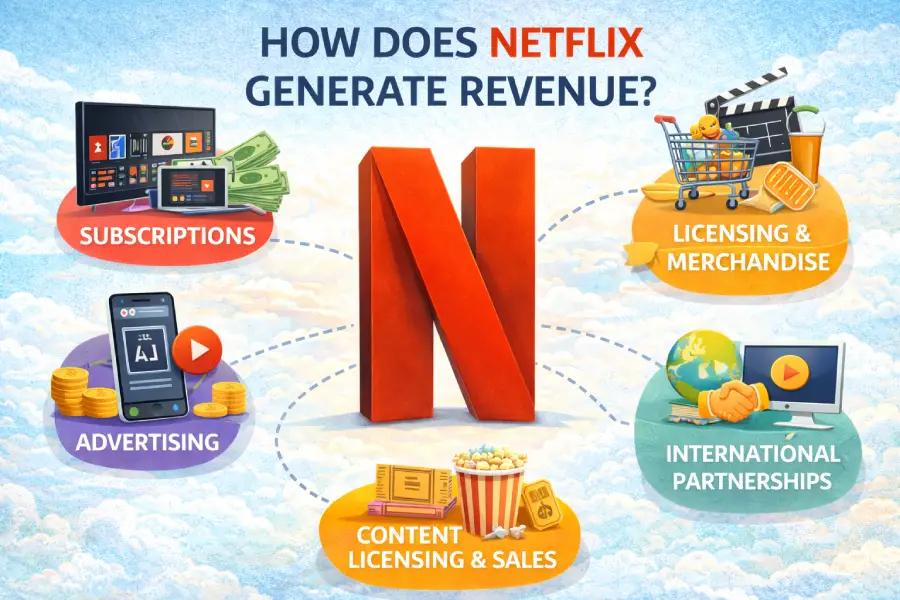
Netflix is one of the world’s most successful digital entertainment companies. From blockbuster original series to global movie releases, Netflix has completely changed how people watch TV and films. But have you ever wondered how does Netflix generate revenue while offering unlimited streaming to millions of users worldwide?
In this detailed guide, we’ll break down Netflix’s revenue model in simple, easy-to-understand English. Whether you’re a general reader, business enthusiast, or someone curious about how big tech companies make money, this article explains everything clearly using latest data from 2024–2025.
Overview of Netflix as a Business
Netflix was founded in 1997 as a DVD rental company. Over time, it transformed into a global streaming platform operating in 190+ countries.
Key Netflix Facts (2024–2025)
- Subscribers: Over 270 million worldwide
- Annual Revenue (2024): Approx. $33 billion
- Headquarters: California, USA
- Business Type: Subscription-based streaming service
- Stock Symbol: NFLX (NASDAQ)
Netflix’s success is mainly built on one core idea: recurring digital subscriptions, supported by new revenue streams.
How Does Netflix Generate Revenue?
Netflix generates revenue primarily through subscription fees, along with advertising, content licensing, and partnership deals.
Let’s explore each revenue source in detail.
1. Subscription-Based Revenue (Main Income Source)
The largest portion of Netflix’s revenue comes from monthly subscription fees paid by users.
How Netflix Subscriptions Work
Users pay a monthly fee to access Netflix’s content library, which includes:
- Movies
- TV shows
- Netflix Originals
- Documentaries
- Mobile games (in some regions)
Netflix earns predictable, recurring income from these subscriptions.
Netflix Subscription Plans (2025)
Netflix offers multiple pricing tiers, which vary by country:
Common Plan Types:
- Basic Plan – Lower video quality, limited screens
- Standard Plan – HD quality, multiple screens
- Premium Plan – Ultra HD (4K), multiple devices
- Mobile-Only Plans – Available in countries like India
Why this works: Different plans allow Netflix to serve both budget users and premium viewers.
Revenue Impact
- Subscription revenue accounts for over 85% of Netflix’s total income
- Price increases over time help boost revenue without increasing users
2. Ad-Supported Subscription Model (Growing Revenue Stream)
To attract price-sensitive users, Netflix introduced an ad-supported plan.
How Netflix Makes Money from Ads
- Users pay a lower subscription fee
- Netflix shows short ads during content
- Advertisers pay Netflix to display ads
This creates dual revenue:
- Subscription fee
- Advertising income
Why Netflix Added Ads
- Competes with platforms like YouTube and Amazon Prime
- Attracts new users who don’t want expensive plans
- Generates additional income without raising prices
By 2025, ad-supported plans account for over 40% of new Netflix sign-ups in some regions.
3. Content Licensing and Distribution Deals
Netflix doesn’t only stream content it also licenses content to other platforms.
How Content Licensing Works
- Netflix creates popular original shows
- Other networks or platforms buy rights to air them
- Netflix earns licensing fees
Examples:
- Selling regional streaming rights
- Licensing Netflix Originals to TV networks
- Distribution rights for airlines or hotels
This allows Netflix to monetize content multiple times.
4. Netflix Originals and Intellectual Property (IP)
Netflix invests billions in original content, which becomes valuable intellectual property.
How Originals Generate Revenue
- Attract new subscribers
- Reduce dependency on third-party studios
- Enable global licensing opportunities
- Support brand partnerships and merchandise
Popular Netflix Originals:
- Stranger Things
- Money Heist
- Squid Game
- The Witcher
Strong original content improves customer retention, which directly increases long-term revenue.
5. Account Sharing Restrictions (Revenue Recovery Strategy)
Netflix previously allowed free password sharing, which cost the company billions.
What Changed?
- Netflix introduced paid sharing options
- Extra members must pay an additional fee
- Primary account holder remains unchanged
Revenue Impact
- Millions of households converted into paid users
- Increased revenue without acquiring new customers
- Improved profitability in 2024–2025
This move significantly boosted Netflix’s revenue growth.
6. Regional Pricing and Local Market Strategy
Netflix uses region-specific pricing to maximize revenue.
Why Regional Pricing Matters
- Different income levels across countries
- Mobile-only plans in developing markets
- Premium pricing in high-income regions
Example:
- India: Affordable mobile plans
- USA & Europe: Higher premium plan pricing
This flexible pricing strategy helps Netflix grow globally.
7. Netflix Games (Emerging Revenue Potential)
Netflix has entered the gaming industry by offering mobile games to subscribers.
Current Model
- Games included at no extra cost
- Focus on engagement, not direct profit yet
Future Revenue Possibilities
- In-game purchases
- Premium gaming subscriptions
- Game licensing deals
While still developing, gaming could become a new revenue stream in the future.
8. Brand Partnerships and Promotions
Netflix partners with brands for:
- Product placements
- Co-marketing campaigns
- Merchandise collaborations
Examples:
- Fashion inspired by Netflix shows
- Food brands tied to popular series
- Travel and tourism promotions
These partnerships help Netflix earn indirect revenue and marketing value.
Netflix Revenue Breakdown (2024–2025)
| Revenue Source | Contribution |
|---|---|
| Subscriptions | ~85–87% |
| Advertising | ~6–8% |
| Licensing & Partnerships | ~4–6% |
| Other (Games, Merch, etc.) | ~2–3% |
How Netflix Keeps Increasing Revenue
Netflix focuses on:
- Increasing average revenue per user (ARPU)
- Expanding into new countries
- Investing in high-quality original content
- Reducing churn with better recommendations
- Introducing new pricing models
Challenges to Netflix’s Revenue Model
Despite success, Netflix faces challenges:
- Rising content production costs
- Strong competition (Amazon Prime, Disney+, Apple TV+)
- Market saturation in developed countries
- Regulatory restrictions in some regions
Netflix responds by diversifying revenue streams and improving efficiency.
Future Revenue Strategy of Netflix
Looking ahead, Netflix plans to:
- Expand ad-supported plans
- Invest more in live content and sports
- Strengthen global original productions
- Explore AI-based personalization
- Grow gaming and interactive content
These strategies aim to sustain long-term revenue growth.
Why Netflix’s Revenue Model Is So Successful
Netflix succeeds because it:
- Uses predictable recurring revenue
- Adapts pricing for different markets
- Continuously innovates content
- Listens to user behavior and trends
This makes Netflix one of the most profitable streaming platforms globally.
Final Thoughts: How Does Netflix Generate Revenue?
So, how does Netflix generate revenue?
Netflix earns money mainly through subscriptions, supported by advertising, content licensing, original productions, and strategic partnerships. Its flexible pricing, global reach, and strong content strategy allow it to grow steadily even in a competitive market.
Netflix’s business model is a perfect example of how digital platforms can build long-term, scalable revenue while keeping users engaged.