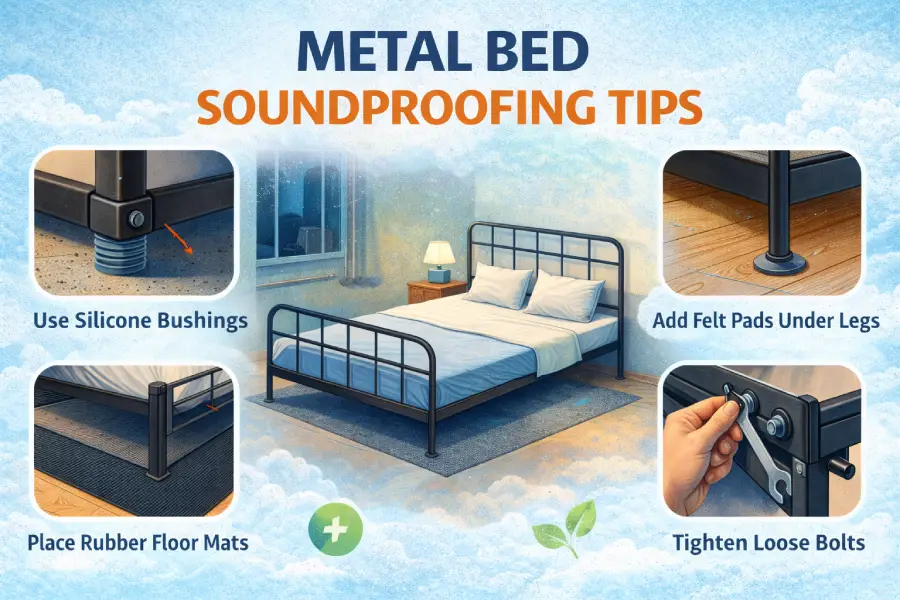
Metal beds are popular because they are strong, affordable, and long-lasting. However, one common problem many people face with metal bed frames is noise. Squeaking, creaking, or rattling sounds can disturb sleep, cause frustration, and even affect health over time.
If your metal bed makes noise every time you move, don’t worry. You don’t need to replace it immediately. With the right metal bed soundproofing tips, you can reduce or completely eliminate these sounds and enjoy peaceful, uninterrupted sleep.
This detailed guide explains why metal beds make noise, how to identify the source, and practical step-by-step solutions to soundproof your metal bed effectively.
Why Do Metal Beds Make Noise?
Before fixing the problem, it’s important to understand why metal bed frames make sound in the first place.
Common Reasons for Metal Bed Noise
Metal beds usually make noise due to:
- Loose bolts and screws
- Metal-to-metal contact
- Worn-out joints
- Uneven flooring
- Poor mattress support
- Old or low-quality bed frame
When weight shifts on the bed, these issues cause friction, resulting in squeaks or creaks.
Types of Sounds Metal Beds Make
Identifying the type of noise helps you choose the right solution.
1. Squeaking Sounds
Usually caused by metal parts rubbing against each other.
2. Creaking Sounds
Often due to loose joints or worn-out connections.
3. Rattling Noises
Happens when bolts or frame parts shake during movement.
4. Grinding Sounds
Caused by rust or damaged metal parts.
How to Identify the Noise Source in a Metal Bed
Before applying soundproofing methods, locate where the noise comes from.
Step-by-Step Check
- Sit and move on different parts of the bed
- Listen closely to joints, corners, and legs
- Check the headboard and footboard
- Inspect mattress slats and support bars
- Look for loose or missing screws
Once you know the problem area, fixing it becomes much easier.
Best Metal Bed Soundproofing Tips (Effective & Easy)
Below are the most practical and proven methods to reduce or eliminate noise from metal beds.
Tighten All Bolts and Screws
Why This Works
Loose hardware is the most common cause of metal bed noise.
How to Do It
- Use a wrench or screwdriver
- Tighten all bolts, nuts, and screws
- Do not overtighten (this can damage threads)
- Check under the bed and behind the headboard
Tip: Check and retighten every 3–6 months.
Use Rubber Washers or Padding
Why This Works
Rubber absorbs vibration and prevents metal-to-metal contact.
What You Can Use
- Rubber washers
- Felt pads
- Foam padding
- Old bicycle inner tubes (DIY option)
How to Apply
- Place padding between joints
- Add rubber washers between bolts and frame
- Secure tightly
This is one of the best soundproofing solutions for metal beds.
Apply Lubrication to Joints
Why This Works
Lubrication reduces friction between moving metal parts.
Best Lubricants for Metal Beds
- WD-40
- Silicone spray
- Machine oil
How to Use
- Clean joints first
- Spray lightly on noisy areas
- Wipe excess oil
Avoid over-lubricating, as it can attract dust.
Use Anti-Slip Pads Under Bed Legs
Why This Works
Uneven floors cause bed movement and noise.
Benefits
- Reduces movement
- Improves stability
- Prevents floor damage
How to Apply
- Place rubber or anti-slip pads under each leg
- Ensure all legs touch the floor evenly
This also helps if your floor is tiled or wooden.
Add Carpet or Rug Under the Bed
Why This Works
Carpets absorb sound and reduce vibration.
Best Options
- Thick area rug
- Carpet mat
- Yoga mat (budget-friendly)
This method is especially useful in apartments with hard flooring.
Use Foam Tape on Metal Slats
Why This Works
Metal slats often cause noise when the mattress moves.
How to Fix
- Apply foam tape along slats
- Ensure mattress rests evenly
- Replace damaged slats if needed
This simple fix can significantly reduce sound.
Secure the Headboard and Footboard
Why This Works
Loose headboards often amplify noise.
How to Fix
- Tighten mounting bolts
- Add rubber pads between wall and headboard
- Use wall anchors if needed
If the bed touches the wall, padding helps reduce sound transfer.
Replace Worn-Out Parts
When to Replace
- Bent frame sections
- Cracked joints
- Rusted bolts
- Broken slats
Replacing small parts is cheaper than buying a new bed.
Use Mattress Grippers or Non-Slip Mats
Why This Works
A shifting mattress can create noise.
How to Use
- Place non-slip mat between mattress and frame
- Ensure mattress fits properly
This also improves sleeping comfort.
Fix Uneven Floors
Simple Solutions
- Use furniture levelers
- Add wooden shims under legs
- Adjust bed height evenly
Even a slight imbalance can cause noise.
DIY Soundproofing Hacks for Metal Beds
If you prefer budget-friendly solutions, try these DIY ideas:
- Old socks wrapped around joints
- Foam pipe insulation on frame bars
- Fabric strips between metal parts
- Cardboard padding for temporary fixes
These are quick and cost-effective options.
When Should You Replace a Metal Bed Frame?
Sometimes soundproofing isn’t enough.
Consider Replacement If:
- Frame is very old
- Metal is cracked or bent
- Noise persists despite fixes
- Safety is compromised
Modern metal beds often come with built-in noise reduction features.
Benefits of Soundproofing a Metal Bed
Soundproofing offers more than just silence.
Key Benefits
- Better sleep quality
- Reduced stress
- Longer bed lifespan
- Improved bedroom comfort
- Less disturbance for partners
Good sleep improves overall health and productivity.
Common Mistakes to Avoid
Avoid these mistakes when soundproofing your metal bed:
- Ignoring loose bolts
- Overusing lubricant
- Using weak padding
- Skipping floor leveling
- Not checking mattress fit
Proper inspection is the key to success.
Maintenance Tips to Keep Your Metal Bed Quiet
To prevent future noise:
- Check bolts regularly
- Clean joints every few months
- Avoid jumping on the bed
- Use quality mattresses
- Keep the bed dry to prevent rust
Regular care ensures long-term silence.
FAQs About Metal Bed Soundproofing
Can a metal bed be completely soundproofed?
Yes, in most cases, proper tightening, padding, and lubrication can eliminate noise.
Is WD-40 safe for metal bed frames?
Yes, but use it sparingly and wipe excess oil.
Do metal beds get noisier over time?
They can, especially if bolts loosen or parts wear out.
Are wooden beds quieter than metal beds?
Wooden beds can also make noise, but metal beds are more prone to squeaking if not maintained.
Final Thoughts: Sleep Better with the Right Metal Bed Soundproofing Tips
A noisy metal bed can ruin your sleep, but the good news is that most noise issues are easy to fix. By tightening bolts, adding padding, using lubrication, and stabilizing the frame, you can enjoy quiet and comfortable sleep without replacing your bed.
These metal bed soundproofing tips are practical, affordable, and effective for most households. With a little effort, you can turn a noisy bed into a silent, sturdy, and comfortable sleeping space.
Sleep well, sleep quietly!