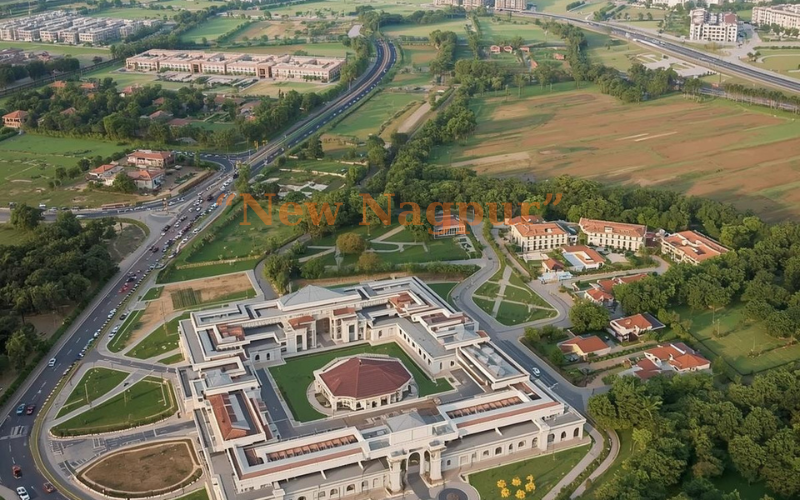
Maharashtra’s latest budget commitments have put Nagpur back in the spotlight. Here’s what’s changing, and why buyers are paying closer attention.
On March 7, 2026, the Maharashtra State Budget reaffirmed the state’s commitment to Nagpur’s long-planned transformation into a Trade and Financial Hub, a project publicly branded “New Nagpur.” Alongside this, several major infrastructure initiatives, from ring road expansion to metro growth to a new data centre, are converging on the city at once.
For anyone considering residential plots in Nagpur, that combination of announcements is worth understanding properly, not just reacting to. Here are five developments shaping the city’s real estate conversation heading into the rest of 2026.
1. Nagpur’s Trade and Financial Hub Push
The state government has been developing plans to position Nagpur as a Trade and Financial Centre, with reported project outlays in the thousands of crores across various phases and announcements over the past year. The stated goal includes new corporate offices, banking infrastructure, and IT campuses, which would bring a wave of new professionals into the city who will need housing.
What this could mean for the local market:
- Job creation across IT, logistics, finance, and services sectors, assuming the projects proceed on the announced timelines
- Rising demand for housing from a growing professional workforce, if that job growth materializes as planned
- Comparisons are often drawn to how early infrastructure announcements in Mumbai’s BKC or Pune’s Hinjewadi preceded years of sustained development, though past patterns in other cities don’t guarantee the same outcome in Nagpur
Given the scale of the figures involved and how they’ve been reported across different announcements and phases, it’s worth verifying the specific numbers tied to any individual project against official Maharashtra government sources before treating them as settled.
2. Nagpur’s Ring Road Development
Ring road projects have historically been a meaningful factor in property demand in Indian cities. In places like Pune, Hyderabad, and Bengaluru, areas along newly completed ring roads have seen substantial increases in property values over the years following construction, though the specific pace and scale varied significantly by city and by how quickly surrounding development actually followed.
What tends to happen around ring road development:
- New residential corridors gradually open up as previously undervalued land gains better connectivity
- Logistics and commercial activity generally arrives first, with residential demand following as infrastructure matures
- Areas along Nagpur’s planned ring road alignment have already begun drawing early interest from investors and developers
As with any infrastructure-driven prediction, actual outcomes depend heavily on construction timelines holding, which can shift.
3. Nagpur Metro’s Continued Expansion
Nagpur’s Metro network has been expanding, with additional routes planned connecting the city to nearby areas including Gondia, Bhandara, and Wardha corridors. Metro connectivity is widely considered one of the more consistent drivers of residential demand in Indian cities that have built out rail transit in recent years.
Patterns worth noting from other cities’ metro expansions:
- Areas within a short radius of metro stations often see stronger property demand than areas further away, once stations are actually operational
- New metro routes can open up residential zones that were previously considered too remote for convenient commuting
- Nagpur’s metro ambitions are frequently compared to larger transit systems in bigger metro areas, though it’s still meaningfully smaller in scale at this stage
4. A Data Centre and New IT Policy
Maharashtra has been developing plans for a State Data Centre in Nagpur alongside a broader push on IT and industry policy in the region. If these initiatives proceed as planned, they could bring higher-salary tech and IT professionals into the city looking for housing.
What often follows IT sector growth in a city:
- IT parks tend to attract supporting infrastructure over time: restaurants, schools, and healthcare facilities
- Nagpur’s cost of living, which is generally lower than Mumbai or Pune, could make it an attractive option for relocating professionals if job opportunities do materialize at scale
- Demand for housing, including independent homes and plotted developments, has historically tended to rise in cities where IT clusters take hold
5. MIHAN’s Continued Development
MIHAN, one of the larger integrated Special Economic Zones (SEZs) in the region, has been developing steadily over the past decade and continues to draw attention as infrastructure and connectivity around it improve.
A few relevant points about the area:
- Property near MIHAN has historically been priced below comparable SEZ-adjacent zones in cities like Pune or Hyderabad, according to various market reports, though the size of that gap varies by source and by exact location
- MIHAN benefits from proximity to Nagpur’s international airport, which supports both business and NRI interest in the area
- SEZ activity, including new logistics and industrial leasing, has continued at a steady pace
As with the other points above, actual future price movement isn’t something that can be promised. It depends on how quickly planned development and leasing activity actually play out.
A Note on Timing and Investment Decisions
Real estate coverage of high-growth cities often comes with urgency messaging, and it’s worth reading that kind of framing carefully. Infrastructure announcements are a genuine and meaningful factor in property markets, but government project timelines shift, funding phases get delayed, and “early mover” comparisons to other cities don’t guarantee the same results will play out in Nagpur on the same schedule.
If you’re evaluating residential plots in Nagpur, it’s worth treating this as one input among several. Confirm project timelines against official government sources, look at RERA registration status for any specific development, and consider getting independent advice from a financial or real estate professional before making a purchase decision, particularly for anything framed as a limited-time opportunity.
For a broader look at what’s drawing people to Nagpur beyond just infrastructure headlines, PostDune’s earlier piece on why young professionals are choosing to stay in Nagpur instead of moving to Mumbai or Pune covers the lifestyle and cost-of-living side of the same trend.